Computer Space
1971 · Space Shooter · Arcade
Overview
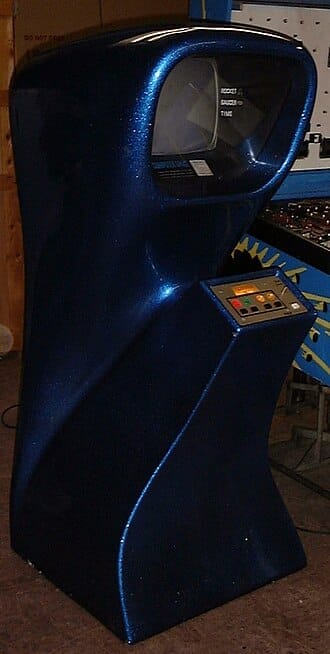
Computer Space is a 1971 space combat arcade video game. Created by Nolan Bushnell and Ted Dabney in partnership as Syzygy Engineering, it was the first arcade video game as well as the first commercially available video game. Computer Space is a derivative of the 1962 computer game Spacewar!
Deep Dive
Computer Space is a 1971 space combat arcade video game. Created by Nolan Bushnell and Ted Dabney in partnership as Syzygy Engineering, it was the first arcade video game as well as the first commercially available video game. Computer Space is a derivative of the 1962 computer game Spacewar! , which is possibly the first video game to spread to multiple computer installations. It features a rocket controlled by the player engaged in a missile battle with a pair of hardware-controlled flying saucers set against a starfield background. The goal is to score more hits than the enemy spaceships within a set time period, which awards a free round of gameplay.
Developer Story
Computer Space was created by Nolan Bushnell and Ted Dabney in 1971, inspired by Spacewar! which Bushnell had played at the University of Utah. Bushnell and Dabney founded Syzygy Engineering to build the game and licensed it to Nutting Associates for manufacturing. It was the first commercially sold arcade video game. Despite modest sales, the experience gave Bushnell and Dabney the confidence to found Atari the following year.
Did You Know?
- Computer Space was housed in a distinctive fibreglass cabinet shaped like a futuristic pod — designed to look like something from a sci-fi film.
- Bushnell designed the game while working at Ampex and reportedly drew the initial schematics on a napkin.
- The game appeared in the 1973 sci-fi film "Soylent Green," making it one of the first video games to appear in a Hollywood movie.
- It sold around 1,500 units — modest by later standards but enough to prove coin-operated video games were commercially viable.
- The game was considered too complex for bar audiences, which directly motivated Bushnell to commission the simpler Pong.