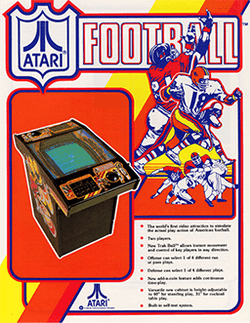
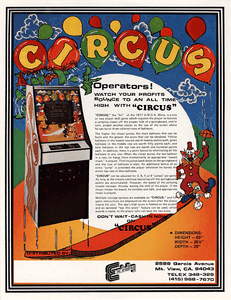
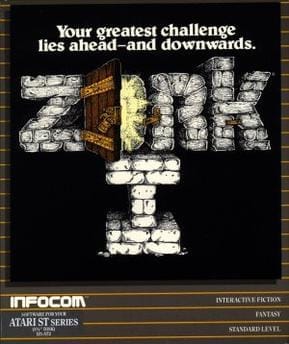
1977
4 games in archive from 1977
The Living Room Becomes a Battleground
Atari launched the Video Computer System in October 1977, bringing interchangeable cartridges to a mass-market home console for the first time. Nine launch titles and a price tag of $199 established a commercial template that the industry still follows. The console war, the killer app, and the third-party developer were all born in the shadow of this one brown-and-wood-grain machine.
A Machine That Changed Everything
When Atari shipped the Video Computer System in the autumn of 1977, the concept of a home games console that could play multiple games via swappable cartridges was not entirely new — Fairchild had launched the Channel F a year earlier — but Atari executed the idea at a scale and with a marketing budget that made it feel like an event. The VCS shipped with a pair of joysticks, a pair of paddle controllers, and a game called Combat that demonstrated two-player tank and dogfight modes. It was not a sophisticated product, but it was a compelling one.
The technical specifications of the VCS — a MOS Technology 6507 processor running at 1.19 MHz, 128 bytes of RAM, and a custom graphics chip called the Television Interface Adapter — forced programmers to race the electron beam of the television screen to draw graphics. This technique, called racing the beam, demanded extraordinary ingenuity from developers and became the source of many of the platform's most memorable visual tricks. The constraint was total but it was also clarifying: every line of code had to earn its place.
By Christmas 1977, Atari had sold approximately 250,000 units. The figure was modest by later standards, but it was enough to establish a beachhead, attract third-party interest, and convince Warner Communications that the acquisition of Atari had been a sound investment. The console business — and the culture of gaming that would grow up around it — had found its first durable foundation.
The Cartridge as the Product
The genius of the VCS architecture was not the console itself but the cartridge slot. A game console that played only the games it shipped with was a toy; a console that could be updated with new software was a platform. Atari understood this distinction before almost anyone else, and the $199 hardware was designed to be a loss leader for the software catalogue it would seed. The nine launch titles were deliberately broad in genre — sports simulations, a strategy game, a basic educational title — because Atari needed to demonstrate that the machine was for everyone.
The implications of the cartridge model took years to fully develop. Third-party development did not arrive in earnest until Activision was founded in 1979 by disgruntled Atari programmers who wanted credit and royalties for their work. But the infrastructure — the cartridge format, the manufacturing relationships, the retail channel — was already in place by 1977. Everything that followed, the explosion of third-party titles, the shovelware crisis of 1982 and 1983, and the licensing system Nintendo instituted after the crash, was a direct consequence of decisions made when the first VCS cartridges rolled off the line.
The living room had become a new kind of space. Families who had never set foot in an arcade could now experience interactive entertainment on the same television they used to watch the news. It was a modest beginning by any objective measure, but the cultural shift was immediate and irreversible. The home console had arrived, and nothing in the entertainment industry would ever be quite the same again.
"We're betting the company on cartridges." — Nolan Bushnell, 1977