1991
23 games in archive from 1991
The Console War Starts in Earnest: SNES, Sonic, and Street Fighter II
The Super Nintendo launched in North America in September 1991, directly confronting a Sega Genesis that had been building market share for two years. Sonic the Hedgehog gave the Genesis a mascot to rival Mario. Street Fighter II redefined the arcade and would transform both consoles' fortunes. The battle between Nintendo and Sega was not merely commercial; it was cultural — a proxy war between rival visions of what a video game should be.
Sonic vs. Mario: The Culture War in Cartridge Form
The marketing of the 1991 console war was a masterpiece of competitive positioning. Sega had identified Nintendo's vulnerability precisely: the company's family-friendly image, its restriction of violent content, its association with a certain kind of safe, wholesome entertainment. Sonic the Hedgehog was designed to attack every one of those associations. He was fast — genuinely, disorienting fast, with a physics model that let him curl into a ball and launch across loop-de-loops at speeds the eye could barely track — and he had an attitude. The artwork gave him a smirk. The manual described him as impatient. The game's tutorial was the first level itself, a rush of speed that communicated everything you needed to know about the tone in about thirty seconds.
Super Mario World, the SNES launch title, was a magnificent game by almost any measure: 96 levels, multiple paths through each world, Yoshi as a ridable companion, a polished presentation that demonstrated the SNES's Mode 7 scaling and rotation effects. But it was, unmistakably, a Mario game — warm, colourful, charming, and built for all ages. In the specific cultural context of 1991, against an opponent actively positioning itself as the edgier, more sophisticated choice, these virtues could be made to look like limitations. Sega's commercials made that argument explicitly, and it worked well enough to earn the company a competitive market position for the first time.
By the end of 1991, the SNES and Genesis were selling in roughly comparable volumes in North America, which was itself a remarkable achievement for Sega. Nintendo had never faced a credible long-term competitor in the 8-bit era. Now it did, and the competition produced something valuable: both companies began developing software faster, pushing their hardware harder, and competing for third-party exclusivity agreements with greater intensity. The console war was bad for everyone's bottom line and very good indeed for the quality of games being made.
Street Fighter II and the Fighting Game Revolution
Street Fighter II: The World Warrior arrived in arcades in February 1991 and within months had generated more coin-op revenue than any game since Pac-Man. The formula was simple in description and complex in execution: eight playable fighters, each with a unique move set including special moves executed by joystick motions combined with button presses, competing in best-of-three matches. The simplicity was the trap; the depth was the game. Players who had memorised the fireball motion for Ryu discovered that there were frame-cancels, cross-ups, links, and a meta-game of character matchups that took years to fully understand.
The cultural impact of Street Fighter II on gaming cannot be overstated. It created the competitive multiplayer community — the tournament scene, the tier lists, the move notation — that still defines competitive gaming today. It generated a sequel and revision cycle (Champion Edition, Hyper Fighting, Super Street Fighter II, Super Turbo) that established the practice of incremental fighting-game updates. And it demonstrated that arcade games could achieve a level of competitive depth that justified repeated play over years rather than weeks.
The home versions of Street Fighter II became the most consequential software releases of the 16-bit era. The SNES version, released in 1992, was widely considered the definitive home port and sold 6.3 million copies, making it the best-selling SNES title of all time. The Genesis version, arriving later with an aggressive price cut, was technically inferior in colour but supported six-button controllers and sold comparably well. Both home versions demonstrated that the 16-bit consoles were capable of hosting arcade-quality experiences — a claim that would have seemed absurd in 1988 and was simply factual by 1992.
"Sega does what Nintendon't." — Sega of America marketing tagline, 1991
Games from 1991

Alien Breed
Amiga

Another World
Amiga

Battletoads
NES

California Games
Atari Lynx

Castle of Illusion Starring Mickey Mouse (Game Gear)
Game Gear

Civilization
PC/DOS

Civilization
Amiga

Dragon Crystal
Game Gear

Fatal Fury: King of Fighters
Neo Geo

Final Fantasy IV
SNES

Metroid II: Return of Samus
Game Boy
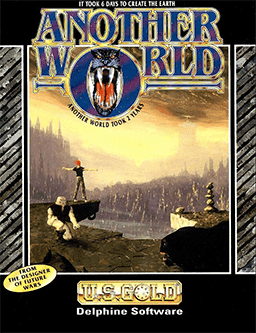
Out of This World
Amiga / DOS

Parasol Stars: The Story of Bubble Bobble III
TurboGrafx-16

Road Rash
Genesis

Shinobi (Game Gear)
Game Gear

Sonic the Hedgehog
Genesis

Sonic the Hedgehog (Game Gear)
Game Gear

Street Fighter II: The World Warrior
Arcade

Streets of Rage
Genesis

Super Castlevania IV
SNES

Super Ghouls 'n Ghosts
SNES

The Legend of Zelda: A Link to the Past
SNES

ToeJam and Earl
Genesis