Kirby's Adventure
1993 · Platform · NES
Overview
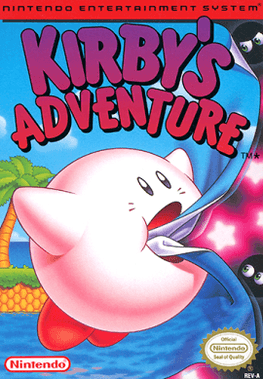
Kirby's Adventure is a 1993 platform game developed by HAL Laboratory and published by Nintendo for the Nintendo Entertainment System (NES). It is the second game in the Kirby series after Kirby's Dream Land (1992) on the Game Boy and the first to include the Copy Ability, which allows the main character Kirby to gain new powers by eating certain enemies. The game centers around Kirby traveling across Dream Land to repair the Star Rod after King Dedede breaks it apart and gives the pieces to his minions.
Deep Dive
Kirby's Adventure is a 1993 platform game developed by HAL Laboratory and published by Nintendo for the Nintendo Entertainment System (NES). It is the second game in the Kirby series after Kirby's Dream Land (1992) on the Game Boy and the first to include the Copy Ability, which allows the main character Kirby to gain new powers by eating certain enemies. The game centers around Kirby traveling across Dream Land to repair the Star Rod after King Dedede breaks it apart and gives the pieces to his minions.
Developer Story
Kirby's Adventure was designed by Masahiro Sakurai at HAL Laboratory in 1993. Sakurai was 22 years old during development and created Kirby's copy ability — absorbing enemies to gain their powers — as the central mechanic. The game used the NES hardware at a level of technical sophistication that shocked contemporary developers; it was released near the end of the NES life cycle but looked more advanced than many Super Nintendo games.
Did You Know?
- Masahiro Sakurai was 22 years old when he designed Kirby's Adventure — he later created Super Smash Bros., another game about absorbing others' abilities.
- Released in 1993, Kirby's Adventure pushed NES hardware beyond what developers thought possible — one of the most technically impressive NES games ever made.
- The copy ability system, where Kirby absorbed enemies to steal their powers, had over 20 distinct abilities — more variety than most action games of the era.
- Kirby's pink colour was finalised only after Miyamoto and Sakurai debated whether he should be pink or yellow.
- The game's final boss, Nightmare, was one of the most dramatic in NES gaming — a cosmic entity fought across two phases in open space.