1993
29 games in archive from 1993
Doom Arrives, the CD-ROM Opens Up, and the Next Generation Stumbles In
id Software released Doom as shareware in December 1993 and redefined what a video game could be: terrifying, viscerally kinetic, and networked for multiplayer deathmatch. The CD-ROM drive arrived as standard equipment on new PCs and gave developers storage capacities that enabled full-motion video, recorded speech, and orchestral music. The 3DO and Atari Jaguar launched as the first would-be 32-bit home consoles, both failing to crack the market but establishing the competitive pressure that would force Sony and Sega to accelerate their own 32-bit plans.
Doom and the Redefinition of Action Gaming
Doom did everything Wolfenstein 3D had done and made it feel obsolete. John Carmack's engine introduced non-orthogonal walls, variable floor and ceiling heights, outdoor environments, flickering lighting, and environmental detail that made the game's levels feel like actual spaces rather than mathematical abstractions. Sandy Petersen joined the team late in development and contributed maps of a different character to Romero's — larger, more labyrinthine, more interested in creating a sense of place — and the combination produced a game whose level design has been studied and imitated for thirty years. The gameplay addition that changed everything was deathmatch: networked multiplayer combat between human players over local area networks, which was simultaneously a technical achievement and a social phenomenon.
The deathmatch feature was almost an afterthought in development terms but it became the reason Doom spread across every corporate LAN in America. Office workers who would never have sought out a first-person shooter were discovering it because a colleague had installed it on the company network. System administrators wrote policies specifically targeting Doom. The game coined the phrase "running Doom" as a test of computational capability — if a device could run Doom, it was sufficiently powerful for most consumer purposes, a rubric applied to everything from scientific calculators to pregnancy tests by enthusiasts in subsequent decades. No other game has been more thoroughly integrated into the culture of computing as a field.
id Software's business model for Doom was the same shareware approach that had worked for Wolfenstein 3D: the first episode, Knee-Deep in the Dead, was free. The remaining two episodes of the original game were sold commercially. Players who found Doom on a bulletin board or received it on a floppy disk from a colleague were expected to pay for the full experience, and millions did. id Software grossed approximately $100 million from Doom and its sequel in the 1990s from a company of fewer than ten people. The economics of shareware game development — low distribution cost, viral spread, high conversion rate — proved that a small team with a technically superior product could outperform any publisher in the market.
The CD-ROM Era and Multimedia Gaming
The arrival of the CD-ROM as standard equipment on consumer PCs in 1993 produced an immediate flowering of a specific kind of game that had previously been impossible: the full-motion-video adventure. Companies from Sierra to Trilobyte to Digital Pictures produced games in which actors performed scenes in front of chroma-key backgrounds, the footage was compressed and stored on CD, and players navigated the narrative by choosing dialogue options or clicking on environmental hotspots. The technology was genuinely exciting — seeing real human faces in a video game was a novelty in 1993 — even if the gameplay was often minimal. Myst took a different approach, using the CD-ROM's storage capacity for pre-rendered still images of extraordinary quality rather than video, and created an experience of visual and intellectual richness that made it the best-selling PC game of the decade.
The CD-ROM also enabled a generation of music games, educational software, and reference products that used the disc's capacity for audio and visual data in ways that floppy-disk games could not approach. LucasArts released Day of the Tentacle in June 1993 with full voice acting for the first time in a LucasArts adventure game, and the talkie version of Monkey Island 2 demonstrated that spoken dialogue could enhance rather than merely supplement the adventure-game experience. The sound design of these games improved dramatically when developers no longer had to compress audio to fit on multiple floppy disks.
The console side of the CD-ROM story was more complicated. The Sega CD attachment for the Genesis and the PC Engine CD-ROM² both existed, but neither had achieved the mainstream adoption that would have made CD-based console gaming the standard. The 3DO attempted to launch a dedicated 32-bit CD-based console at $699 and failed commercially despite genuine technical merit. The lesson the industry drew from 1993 was that CD-based gaming was the future and that the challenge was to deliver it at a price point — below $300 — that mass-market consumers would accept. Sony and Sega were both working on answers to that question.
"Doom is just a game. A very, very good game." — Sandy Petersen, id Software level designer, 1993
Games from 1993

Aladdin
Genesis

Breath of Fire
SNES

Cannon Fodder
Amiga

Daytona USA
Arcade

Disney's Aladdin (SNES)
SNES

Doom
PC/DOS

Dracula X: Rondo of Blood
TurboGrafx-16

Fatal Fury Special
Neo Geo

Gunstar Heroes
Genesis

Hired Guns
Amiga

Illusion of Gaia
SNES
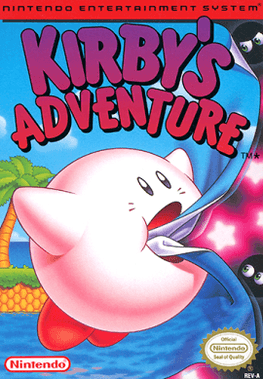
Kirby's Adventure
NES

Mega Man X
SNES

Myst
PC

NBA Jam
Arcade

Phantasy Star IV: The End of the Millennium
Genesis

Rocket Knight Adventures
Genesis

Samurai Shodown
Neo Geo

Samurai Shodown
Neo Geo

Secret of Mana
SNES

Shining Force II: Ancient Sealing
Genesis

Shinobi III: Return of the Master Ninja
Genesis

Shockwave: Operation Jumpgate
3DO

Star Fox
SNES

Sunset Riders
SNES

Super Bomberman
SNES

The Chaos Engine
Amiga

The Legend of Zelda: Link's Awakening
Game Boy

Virtua Fighter
Arcade