After Burner
1987 · Rail Shooter · Arcade
Overview
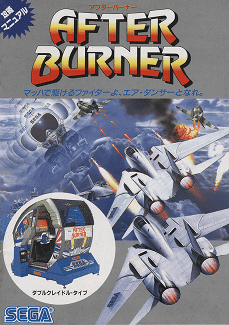
After Burner is a 1987 rail shooter video game developed by Studio 128 and published by Sega for arcades. The player controls an American F-14 Tomcat fighter jet and must clear each of the game's 18 stages by destroying enemies. The plane is equipped with a machine gun and a limited supply of heat-seeking missiles.
Deep Dive
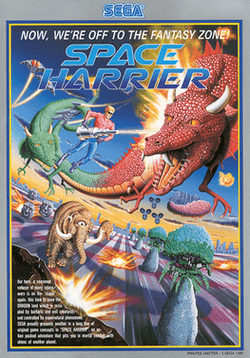
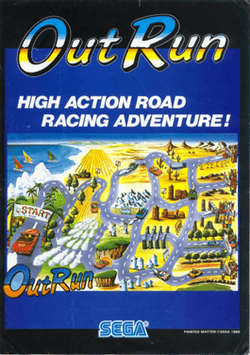
After Burner is a 1987 rail shooter video game developed by Studio 128 and published by Sega for arcades. The player controls an American F-14 Tomcat fighter jet and must clear each of the game's 18 stages by destroying enemies. The plane is equipped with a machine gun and a limited supply of heat-seeking missiles. The game uses a third-person perspective, as in Sega's earlier Space Harrier (1985) and Out Run (1986). It runs on the Sega X Board arcade system which is capable of surface and sprite rotation. It is the fourth Sega game to use a hydraulic "taikan" motion simulator arcade cabinet, one that is more elaborate than their earlier "taikan" simulator games.
Developer Story
After Burner was designed by Yu Suzuki at Sega in 1987. The third-person aerial dogfighting game used Sega's Super Scaler hardware at its most impressive — hundreds of enemy aircraft scaled and rotated at 60fps to simulate aerial combat. The hydraulic cabinet moved the entire cockpit in sync with the on-screen action. After Burner grossed more per machine than almost any game before it.
Did You Know?
- The hydraulic cabinet version of After Burner physically tilted the entire cockpit — one of the most elaborate arcade experiences ever built.
- After Burner used a real F-14 Tomcat as its visual basis, capitalising on the Top Gun film released the previous year.
- The game had no reloading mechanic — machine gun ammunition and missiles were unlimited, making forward momentum and survival the only goals.
- Suzuki directed the production like a film — the missions followed a narrative arc with specific enemy formations for each stage.