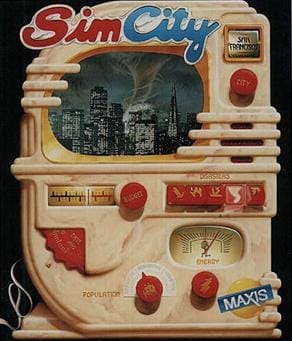
SimCity
1989 · City Building / Simulation · Macintosh / PC
Overview
SimCity is a city-building simulation video game developed by Will Wright, and released for several platforms from 1989 to 1991. SimCity features two-dimensional graphics and an overhead perspective. The game's objective is to create a city, develop residential and industrial areas, build infrastructure, and collect taxes for further city development.
Deep Dive
SimCity is a city-building simulation video game developed by Will Wright, and released for several platforms from 1989 to 1991. SimCity features two-dimensional graphics and an overhead perspective. The game's objective is to create a city, develop residential and industrial areas, build infrastructure, and collect taxes for further city development. Importance is placed on increasing the population's standard of living, maintaining a balance between the different sectors, and monitoring the region's environmental situations to prevent the settlement from declining and going bankrupt.
Developer Story
SimCity was designed by Will Wright at Maxis in 1989. Wright was inspired by watching his daughter play Sim City while on a long car trip, noticing she spent more time building than playing. He designed a game where there was no win condition — only the ongoing management of a city. Publishers rejected it for years as "not a game." Broderbund finally agreed to distribute it, and it became one of the best-selling PC games of the 1980s.
Did You Know?
- SimCity was rejected by publishers for years because it had no win condition — a city management toy, not a game by conventional definitions.
- Wright was inspired by urban planning literature and systems dynamics textbooks, bringing academic thinking into game design.
- Scenarios — disasters including earthquakes, floods, and monster attacks — were added by the publisher as the only way to create "game-like" objectives.
- SimCity directly launched the "god game" and simulation genre, leading to The Sims, Cities: Skylines, and dozens of management simulators.
- Will Wright later designed The Sims, which became the best-selling PC game series in history — both games had the same "no win condition" philosophy.