Strategy & Simulation
Long-term thinking, emergent systems, and the joy of complexity
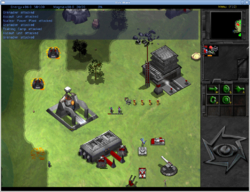
License: GPL v2+
| First chess program | Bernstein Chess (IBM, 1957) |
| City sim origin | SimCity (Maxis/Will Wright, 1989) |
| Defining 4X game | Civilization (Meier/Shelley, 1991) |
| Key creators | Sid Meier, Will Wright, Chris Crawford |
Strategy and simulation games reward planning, resource management, and systems thinking. From chess programs to Civilization, SimCity to X-COM, these games challenge players to manage complexity — and created gaming's deepest intellectual traditions and most devoted communities.
Overview
Strategy games require planning and decision-making over longer time horizons than action games, trading immediate reflex demands for deeper intellectual engagement. Simulation games model real-world systems — cities, economies, armies, ecosystems — allowing players to understand and manipulate complexity emergently. The two genres overlap significantly: Civilization simulates the sweep of human history as a strategic competition; SimCity simulates civic management as an open-ended strategy challenge with no defined end state.
History
Computer chess programs predated the video game industry. Claude Shannon's 1950 paper "Programming a Computer for Playing Chess" laid the theoretical foundation. IBM's Bernstein Chess Program (1957) was the first complete chess program capable of playing a legal game. Chess programming became a benchmark for artificial intelligence for decades, culminating in IBM Deep Blue defeating world champion Garry Kasparov in 1997.
Wargames on the PLATO network inspired the first commercial strategy titles. Walter Bright's Empire (1977) — a text-based world conquest game — influenced everything from Risk adaptations to Civilization. Board game publisher Avalon Hill computerised its war games through the early 1980s, building a dedicated strategy audience on Apple II and TRS-80 machines.
Sid Meier's Pirates! (1987) proved that complex simulation games could have mainstream appeal through personality and humour. Meier followed with Civilization (1991), co-designed with Bruce Shelley — a turn-based empire-building game spanning the Bronze Age to the space age. Civilization consumed players for entire nights; "one more turn" became gaming's most recognisable compulsion and the defining shorthand for compelling design.
Will Wright's SimCity (1989) created the city-building simulation genre. Players zoned land, built infrastructure, managed budgets, and survived disasters in an open-ended simulation with no win condition. Wright's design philosophy — emergent complexity from simple rules, the player as scientist and the game as laboratory — influenced game design theory profoundly and eventually produced The Sims, one of the best-selling franchises in gaming history.
Mechanics
Turn-based strategy games give players unlimited time to plan, rewarding deep analysis and long-term thinking. Real-time strategy (RTS) adds time pressure, demanding faster decision-making and parallel task management. 4X games (Explore, Expand, Exploit, Exterminate) offer the broadest scope: players build civilisations from scratch across historical epochs. Management simulations replace combat with resource allocation and systemic optimisation — understanding feedback loops and emergent behaviour rather than defeating opponents.
Cultural Impact
Civilization is regularly cited as a game that genuinely changed how players think about history, geography, and political systems. Academics have assigned it in courses on international relations. The "Civilization Paradox" — a game designed to be educational about history that is simultaneously deeply inaccurate in its simplifications — sparked productive debate about games as historical models and metaphors. SimCity influenced real urban planners and became a standard in urban design education. Will Wright's design philosophy — games as systems to understand rather than stories to consume — remains the most intellectually ambitious tradition in the medium.
30 Games in Archive

The Sumerian Game
IBM 7090
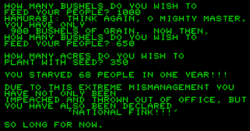
Hamurabi
PDP-8 / BASIC
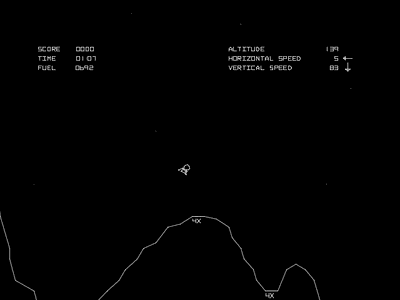
Lunar Lander (1969)
PDP-8
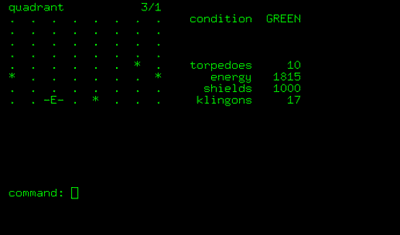
Star Trek (BASIC)
BASIC / SDS Sigma 7
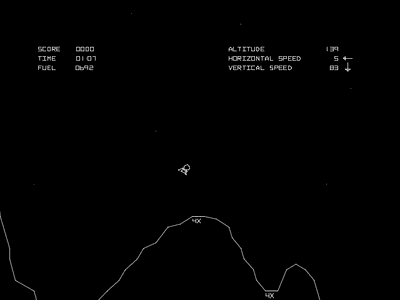
Lunar Lander
Arcade
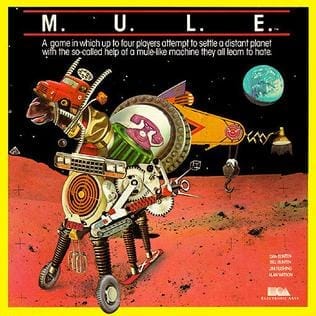
M.U.L.E.
Atari 8-bit / Multiple
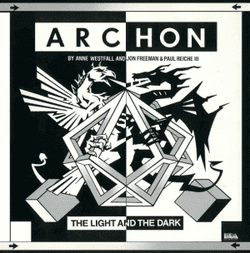
Archon
Atari 8-bit / Apple II

Elite
BBC Micro / Multiple

Spy vs. Spy
Commodore 64 / Multiple
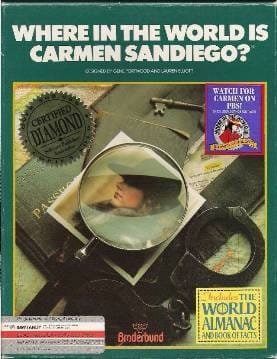
Where in the World Is Carmen Sandiego?
Apple II / Multiple

The Oregon Trail
Apple II / DOS

Pirates!
Commodore 64 / Multiple
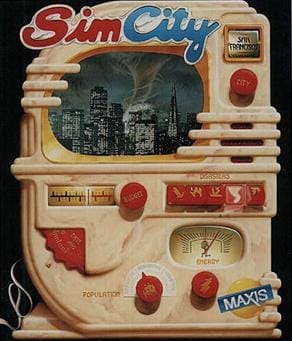
SimCity
Macintosh / PC
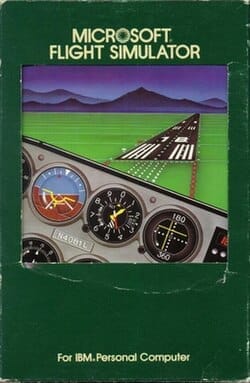
Microsoft Flight Simulator
PC/DOS

Civilization
PC/DOS

Warcraft II: Tides of Darkness
PC/DOS

Command and Conquer
PC/DOS

StarCraft
PC

Dune II: The Building of a Dynasty
PC/DOS

X-COM: UFO Defense
PC/DOS

Age of Empires
PC

Age of Empires II: The Age of Kings
PC

Command and Conquer: Red Alert
PC

Military Madness
TurboGrafx-16

Pilotwings
SNES

Populous
Amiga

Civilization
Amiga

Theme Park
Amiga

Worms
Amiga

The Seven Cities of Gold
Atari 8-bit