1989
31 games in archive from 1989
The Portable Revolution: Game Boy, Tetris, and the Future in Your Pocket
Nintendo launched the Game Boy in Japan in April 1989, and the decision to bundle it with Tetris was one of the most consequential product decisions in gaming history. The Sega Genesis launched in North America in August, beginning the 16-bit era. Between the Game Boy's mass-market portable gaming and the Genesis's promise of console gaming at a new level of fidelity, 1989 defined the next five years of the industry.
The Game Boy and the Genius of Tetris
The Game Boy was not the most powerful handheld available in 1989. Atari's Lynx had a colour screen and superior processing power. The Sega Game Gear, arriving in 1990, would also offer colour. But Nintendo's device had two things neither competitor could match: a battery life of approximately 15 hours on four AA batteries, versus the Lynx's roughly four hours, and Tetris. Alexey Pajitnov's falling-block puzzle game, designed in the Soviet Union in 1984, had found its way through a tortuous series of licensing negotiations to Nintendo, and the decision to bundle it with the Game Boy transformed the device's commercial potential overnight.
Tetris was the right game for a portable device for reasons that were immediately legible to anyone who tried it. Sessions could be ended and resumed at any time. The rules were learnable in thirty seconds and masterable over a lifetime. The game had no protagonist, no narrative, and no graphic violence, which meant that it appealed to demographics — women, older adults, commuters — who had never previously bought a video game. Nintendo's marketing noted this explicitly, targeting the Game Boy at the entire family rather than at the twelve-year-old boy who was the assumed audience for console hardware.
The Game Boy sold 1 million units in the United States in its first two weeks after launching in North America in July 1989. It would eventually sell 118 million units across its original and Pocket variants before the Game Boy Color arrived in 1998. No handheld console before or since has achieved comparable market penetration relative to the era, and the success formula — modest hardware, long battery life, essential software — was one Nintendo would follow with the DS and Switch generations. Tetris was not just a launch title; it was an argument about what video games were for.
The 16-Bit Era Begins
Sega launched the Genesis in North America with a confidence bordering on aggression. The company had watched Nintendo dominate the 8-bit market for four years and had concluded that the only viable strategy was to position itself as the console for older, more sophisticated players. The marketing slogan "Genesis does what Nintendon't" was a direct attack on Nintendo's family-friendly image, and the early software library — Golden Axe, Altered Beast, Revenge of Shinobi — skewed toward arcade action games that felt more adult than the NES library. Sega was not trying to beat Nintendo at Nintendo's game; it was trying to redefine what game was being played.
The technical specifications of the Genesis — a Motorola 68000 processor at 7.67 MHz, 64 simultaneously displayed colours from a palette of 512, and FM synthesis audio through a Yamaha YM2612 chip — were a genuine generational leap over the NES. Software that demonstrated these capabilities, particularly the coin-op ports that Sega could draw on from its own arcade division, made the NES look dated by comparison. The strategy would take years to pay off — Nintendo's software library was too strong and its retail relationships too deep for Sega to displace it quickly — but the Genesis established a credible second console market for the first time since the 1983 crash.
The 16-bit era that began in 1989 would produce what many historians of the medium consider the richest period of console game design: the years between 1989 and 1995 saw the creation of the RPG as a mainstream genre, the refinement of the fighting game, the emergence of the cinematic platformer, and the technological peak of the sprite-based image. Every major studio from Capcom to Square to Konami to Electronic Arts produced its most enduring work in this window. The Genesis launch was the first note of a movement that would take six years to fully play out.
"Tetris is the only game I've ever played that I find myself seeing in my dreams." — Jeff Minter, 1989
Games from 1989

Altered Beast
Genesis
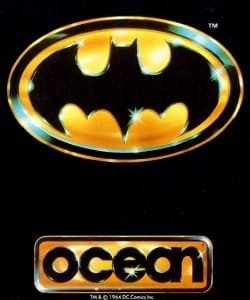
Batman
NES

Battletoads
Arcade / NES

Blazing Lazers
TurboGrafx-16

Bonk's Adventure
TurboGrafx-16
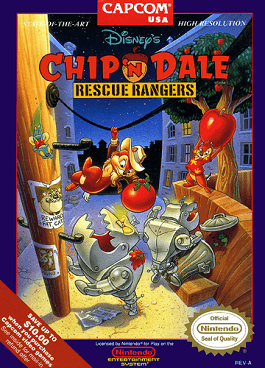
Chip 'n Dale Rescue Rangers
NES

Chip's Challenge
Atari Lynx

Dragon Spirit
TurboGrafx-16
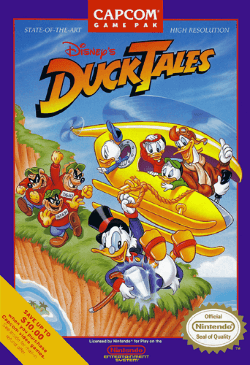
DuckTales
NES

Dungeon Explorer
TurboGrafx-16

Final Fight
Arcade
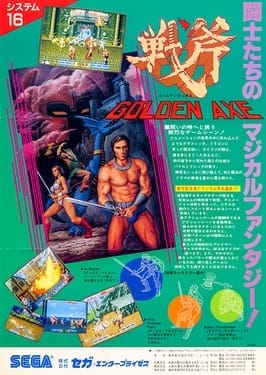
Golden Axe
Arcade

Golden Axe
Genesis
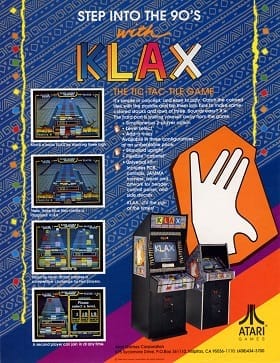
Klax
Arcade
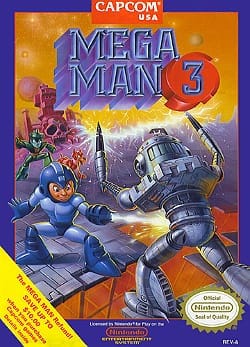
Mega Man 3
NES
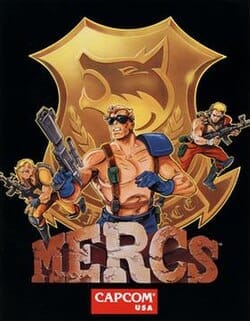
Mercs
Arcade

Military Madness
TurboGrafx-16

Populous
Amiga
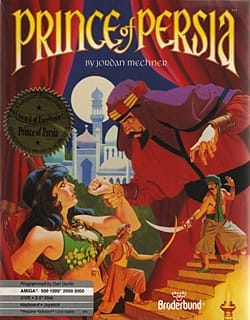
Prince of Persia
Apple II / DOS
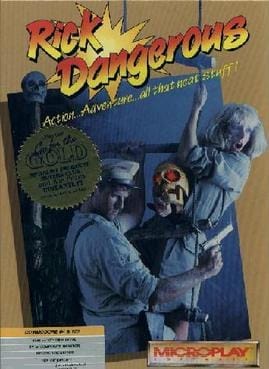
Rick Dangerous
Amiga / Atari ST

Shadow of the Beast
Amiga

Shadow of the Beast
Amiga
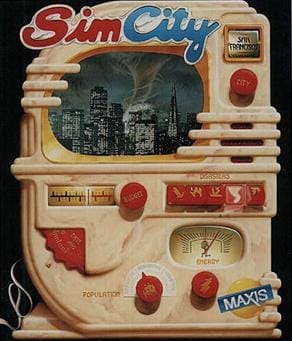
SimCity
Macintosh / PC
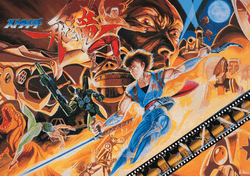
Strider
Arcade

Super Mario Land
Game Boy
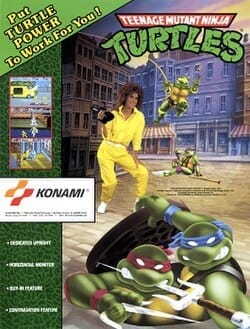
Teenage Mutant Ninja Turtles
Arcade

Tetris (Game Boy)
Game Boy
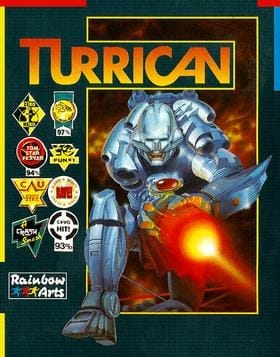
Turrican
Commodore 64 / Amiga
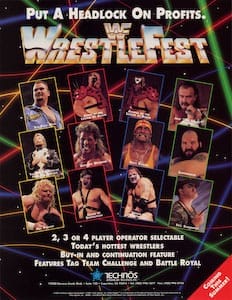
WrestleFest
Arcade

Ys Book I & II
TurboGrafx-16

Ys I & II
TurboGrafx-16