1986
20 games in archive from 1986
Nintendo Expands Its Universe: Zelda, Metroid, and the Birth of the Adventure Game
If 1985 established the NES as the dominant home platform, 1986 defined what the NES was for. The Legend of Zelda and Metroid introduced open-world exploration and atmospheric isolation to a medium that had been dominated by left-to-right progression. Meanwhile, Sega launched the Master System in North America in an attempt to break Nintendo's grip — an attempt that would succeed only in Europe and Brazil, but whose failure shaped Sega's entire strategy for the decade ahead.
Zelda and the Open World
The Legend of Zelda arrived in Japan in February 1986 as something the NES had not yet demonstrated it could do: a game without a clear beginning, middle, and end in the conventional sense. Players were deposited in the corner of a map and left to discover their own path through nine dungeons, a world of hidden passages, and enemies whose behaviour required genuine study to understand. The gold cartridge (later the gold cartridge with battery backup) was itself a statement of ambition — the save feature meant that Zelda was a game you lived with over weeks rather than a game you completed in an afternoon.
Shigeru Miyamoto conceived the game as a miniature garden that players could explore freely, and the metaphor holds up perfectly. The overworld of Hyrule was not large by later standards — 256 screens arranged on a 16-by-16 grid — but it was dense with meaning. Every screen had a reason to exist: a passage to a dungeon, a merchant's cave, a fairy fountain, or simply a visual landmark that helped players build their mental map of the territory. The dungeons, designed by Miyamoto and Takashi Tezuka, increased in complexity and length in a carefully calibrated progression that made each new room feel like a reward for the rooms already conquered.
The commercial result was immediate and lasting. Zelda sold more than 6.5 million copies on the NES and became the template for a genre — the action-adventure — that would eventually encompass some of the most influential games ever made. More importantly, it established that the NES was a platform for experiences of genuine depth and duration, not merely for the quick sessions that arcade games provided. The console was not just a domestic arcade machine; it was a storytelling medium, and Zelda was the proof.
Metroid and the Atmosphere of Isolation
Metroid arrived four months after Zelda and completed a philosophical pair with it. Where Zelda was warm, daylit, and populated — a world of villages and merchants and friendly advisers — Metroid was cold, dark, and almost entirely empty. Planet Zebes was a labyrinth of interconnected caverns, each biome distinguished by a colour palette and enemy set, the whole thing wrapped in Hirokazu Tanaka's score: a collection of sparse, repeating motifs that suggested threat rather than describing it. The game was genuinely unsettling in a way that no NES title had previously achieved.
The structural innovation of Metroid — the system in which new abilities unlock previously inaccessible areas, requiring backtracking across a persistent world — would become one of the most influential designs in game history. The genre it established, later named Metroidvania in combination with Castlevania's gothic exploration sequences, remains commercially and critically vital today. But in 1986, the most radical thing about Metroid was simply that it felt like a place. The asteroid-mining colony aesthetic, the drip of atmosphere, the complete absence of any narrative hand-holding: these were choices that treated the player as an adult navigating a hostile environment, not a child being escorted through a theme park.
The reveal of Samus Aran's gender at the game's conclusion — triggered only by finishing the game under a time threshold — was a genuine shock in 1986 and remains one of the most discussed design decisions of the era. Whether intentional as a feminist statement or simply a surprise bonus for skilled players, it established Samus as the most iconic female protagonist in gaming and gave Metroid a cultural resonance beyond its already considerable mechanical achievement. The NES had produced, in a single year, two of the most influential game designs in history.
"It's dangerous to go alone! Take this." — The Legend of Zelda, 1986
Games from 1986
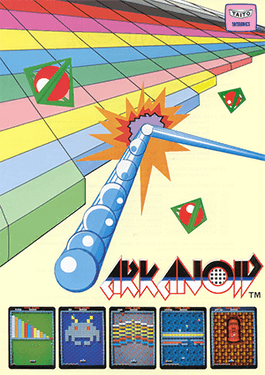
Arkanoid
Arcade

Bubble Bobble
Arcade

Castlevania
NES / Famicom Disk System
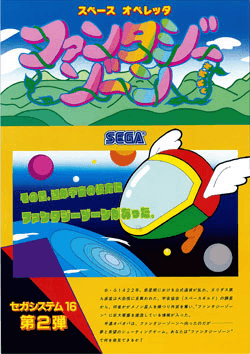
Fantasy Zone
Arcade
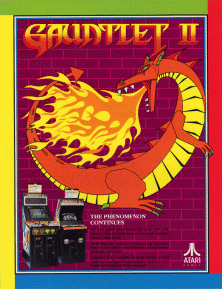
Gauntlet II
Arcade
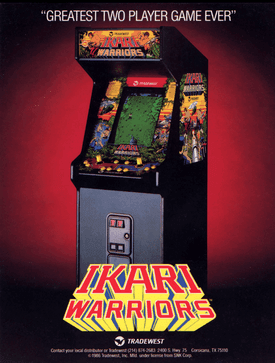
Ikari Warriors
Arcade
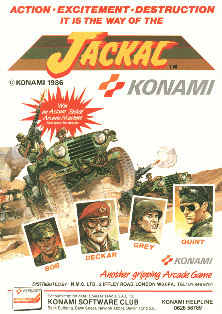
Jackal
Arcade
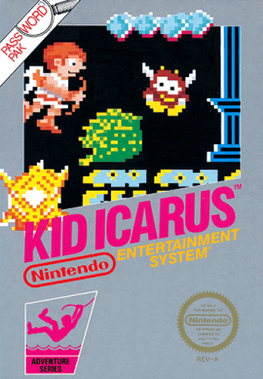
Kid Icarus
NES / Famicom Disk System

Knightmare
MSX
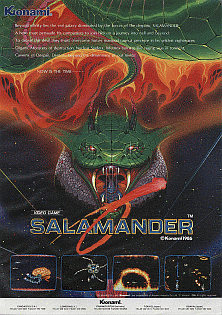
Life Force
Arcade
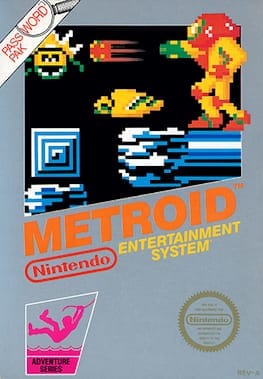
Metroid
NES / Famicom Disk System
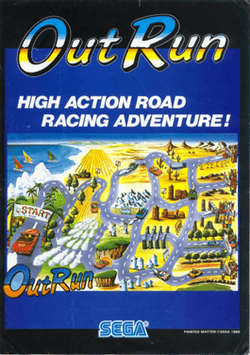
Out Run
Arcade

Out Run
Arcade
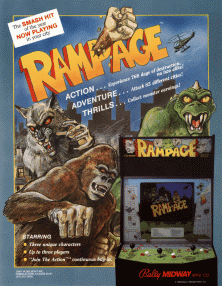
Rampage
Arcade
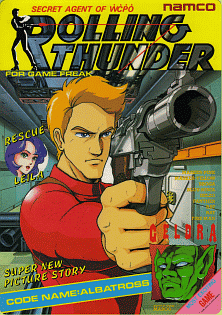
Rolling Thunder
Arcade
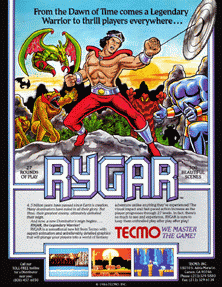
Rygar
Arcade
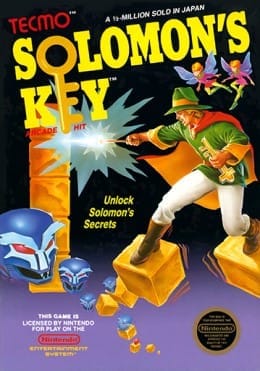
Solomon's Key
Arcade

Space Quest
PC/DOS

The Legend of Zelda
NES

Vampire Killer
MSX