1983
13 games in archive from 1983
The Great Crash: $3 Billion Evaporates and the Industry Resets
The North American video game market collapsed catastrophically in 1983 and 1984, shedding an estimated $3 billion in revenue and nearly destroying the home console industry. The causes were structural — a flooded market, no quality control, and consumer loss of confidence — and the consequences were permanent. When the industry recovered, it did so under Japanese leadership and with a licensing regime designed to ensure the crash could never happen again.
How an Industry Ate Itself
The North American video game crash of 1983 is the most studied catastrophe in the history of the medium, and its causes are still debated. The standard account points to market saturation — too many consoles (Atari 2600, Atari 5200, Mattel Intellivision, ColecoVision, Magnavox Odyssey 2) competing for the same living rooms — combined with a catastrophic loss of software quality control. Without a licensing regime analogous to Nintendo's later Seal of Quality, any company could manufacture and sell cartridges for the Atari 2600. The result, by 1982 and 1983, was a retail shelf environment in which consumers had no reliable way to distinguish competent games from worthless ones.
The specific games most associated with the crash — Atari's home port of Pac-Man and the E.T. the Extra-Terrestrial tie-in — are symbols rather than causes. Pac-Man sold 12 million copies despite existing for only 10 million VCS owners because Atari had anticipated massive demand and overproduced. The E.T. game, designed by Howard Scott Warshaw in five weeks to meet a Christmas 1982 deadline, was shipped in quantities that exceeded total active player demand. Both games were returned in enormous numbers, and retailers responded by discounting all software aggressively. When discounting failed to move inventory, the product was cleared from shelves entirely.
The long-term damage was to consumer confidence. By Christmas 1983, parents who had bought their children an Atari console and found the software experience to be inconsistent and often genuinely poor were not inclined to repeat the experiment. Retailers who had watched margins collapse on millions of returned cartridges were not inclined to restock the category. The industry did not simply contract — it nearly ceased to exist in North America, and the companies most responsible for building it were either bankrupt, sold, or in retreat by 1984.
The Seed of Recovery: Famicom in Japan
While North America was experiencing total market collapse, Nintendo was quietly launching the Family Computer in Japan in July 1983. The Famicom — a compact red-and-white cartridge console with a custom Ricoh 2A03 processor and dedicated graphics hardware — launched with Donkey Kong, Donkey Kong Jr., and Popeye as its first titles. It sold 500,000 units in two months despite a recall for faulty hardware in the first production run. Nintendo replaced every defective unit at its own expense, a decision that cost millions but established a reputation for quality that would prove to be the company's most durable competitive advantage.
The contrast between the Japanese and North American experiences in 1983 illuminates the real nature of the crash. The problem was not that consumers had permanently lost interest in video games; the problem was that the North American market had been flooded with unreliable hardware and low-quality software by companies more interested in short-term revenue than in building a sustainable business. Nintendo's approach — controlled hardware manufacturing, careful quality oversight of software, aggressive first-party development — addressed every structural flaw that had destroyed Atari and its rivals.
Nintendo would not attempt a North American launch until 1985, and when it did, it rebranded the Famicom as the Nintendo Entertainment System and sold it initially in New York City as a test. The company also made a crucial positioning decision: rather than selling the NES as a video game console (a category that American consumers associated with failure and disappointment), Nintendo marketed it as an entertainment system, complete with an accessories line called the Robot Entertainment System. The crash had created the conditions for a new kind of company to dominate the market, and Nintendo was perfectly positioned to step into the vacuum.
"The Atari debacle proves that video games are a fad whose time has passed." — BusinessWeek, 1983
Games from 1983
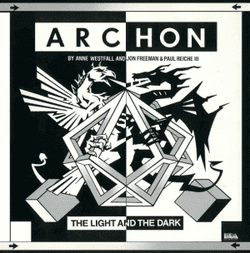
Archon
Atari 8-bit / Apple II
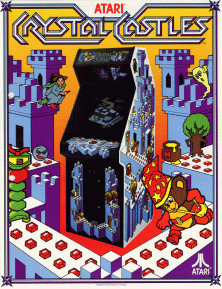
Crystal Castles
Arcade

Dragon's Lair
Arcade
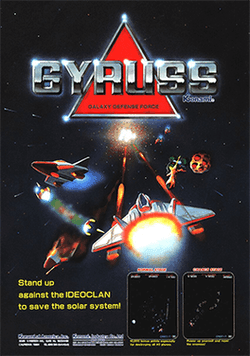
Gyruss
Arcade
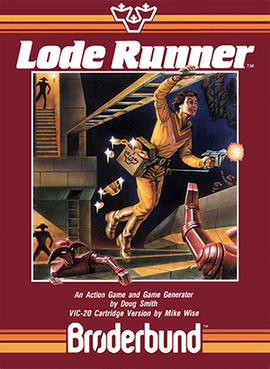
Lode Runner
Apple II / Multiple
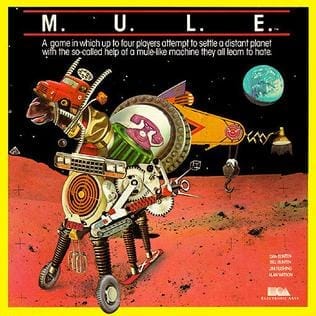
M.U.L.E.
Atari 8-bit / Multiple
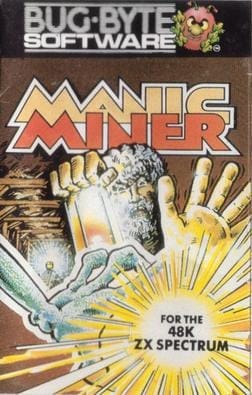
Manic Miner
ZX Spectrum
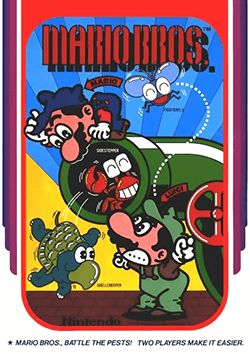
Mario Bros.
Arcade

Spy Hunter
Arcade
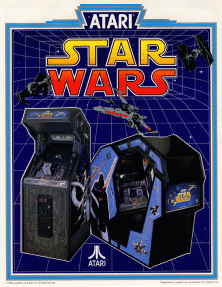
Star Wars
Arcade
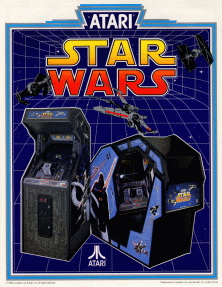
Star Wars (Arcade)
Arcade
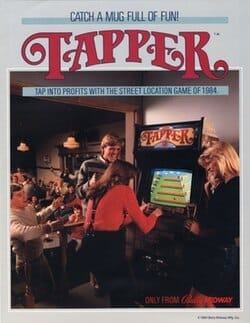
Tapper
Arcade
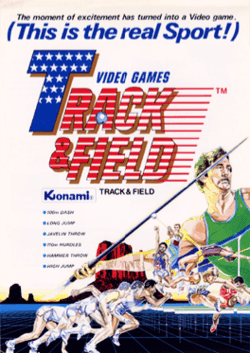
Track & Field
Arcade