1985
13 games in archive from 1985
Nintendo Revives the Console: Super Mario Bros. and the NES Change Everything
Nintendo launched the NES in New York City in October 1985 and, defying widespread industry scepticism, sold 50,000 units in time for Christmas. The pack-in title, Super Mario Bros., was unlike anything the home gaming market had previously seen: a vast, non-linear world of exploration, secrets, and escalating challenge. Within two years, the NES had done what virtually every analyst said was impossible — it had rebuilt the North American console market from zero.
Mario and the Art of the Killer App
Super Mario Bros. was not the first game to feature Mario — that was Donkey Kong in 1981, and the character had starred in Mario Bros. in 1983 — but it was the first game to give him a world rather than a screen. Shigeru Miyamoto and Takashi Tezuka designed the Mushroom Kingdom as an interlocking system of levels that rewarded exploration, experimentation, and mastery. Every screen contained secrets: hidden coin blocks, warp pipes that skipped entire worlds, a flagpole trick that determined which fireworks played at the end of a level. Players who had finished the game were still discovering things they had missed. It was, by the standards of 1985, a staggering work of craft.
The technical achievement was equally significant. The NES used a custom Ricoh 2A03 processor and a Picture Processing Unit that could handle 64 sprites simultaneously, scroll backgrounds smoothly, and display 52 colours on screen. Super Mario Bros. exploited every capability of the hardware, using parallax scrolling to suggest depth, a dynamic soundtrack that accelerated when the player was running low on time, and enemy AI sophisticated enough to create genuine tactical challenges. The game was not just fun to play; it was demonstrably more advanced than anything the home market had previously seen.
For the North American games industry, Super Mario Bros. was proof that the console market was not dead — it had merely been murdered by incompetence. Nintendo's NES launched in New York with a 90-day consignment deal that removed all financial risk from retailers. If the hardware did not sell, Nintendo would take it back. This single commercial decision broke the retailer resistance that had kept console products off shelves since 1983. Within two years, the NES had national distribution, a library of quality-controlled software, and a market share that would make Nintendo the most powerful company in entertainment.
The Licensing Revolution
Nintendo's most consequential innovation in 1985 was not hardware or software but governance. The Nintendo Seal of Quality, backed by a legal and technical licensing regime, required every third-party developer who wanted to publish NES games to submit their titles for review, pay a per-cartridge royalty, and agree to a limit of five titles per year. The technical enforcement mechanism was a lockout chip called the 10NES, a challenge-response system that prevented unlicensed cartridges from running on the console. This was not a trivial imposition: it forced developers to choose Nintendo as their primary platform and to produce their best work rather than flooding the market with low-effort titles.
The commercial logic was clear but the precedent it set was profound. Nintendo had effectively asserted that the console manufacturer, not the software developer, controlled access to the market. Every major console platform from 1985 onward — Sega, Sony, Microsoft — would adopt a variant of this model. The open platform that had allowed anyone to publish Atari 2600 cartridges was replaced by a closed ecosystem in which the platform holder took a percentage of every sale and in which entry was conditional on meeting standards the platform holder defined. The console business, as it exists today, was invented in 1985.
Third-party developers who accepted the terms — and most of them did, because the NES was the only viable home console market — discovered that Nintendo's standards, though restrictive, were commercially rational. Capcom's Ghosts 'n Goblins NES port, Konami's licensed titles, Hudson Soft's conversion work: all benefited from the quality floor Nintendo imposed. The NES library, by the end of the decade, would contain hundreds of games of which a substantial fraction were genuinely excellent. That ratio of good to bad software was unprecedented in the console era and remained unmatched for years.
"Mario is more recognizable than Mickey Mouse." — consumer research study cited by Nintendo of America, 1990
Games from 1985
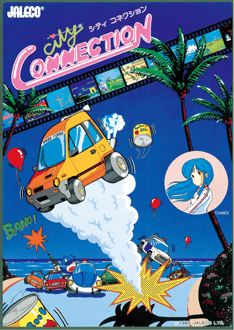
City Connection
Arcade
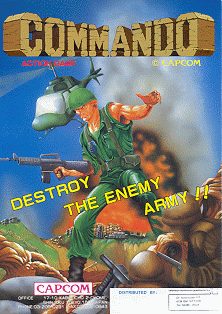
Commando
Arcade
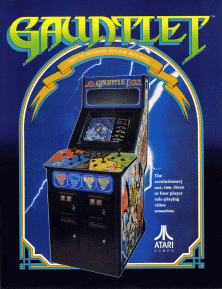
Gauntlet
Arcade

Gradius
Arcade

Gradius
MSX

Hang-On
Arcade / Sega Master System
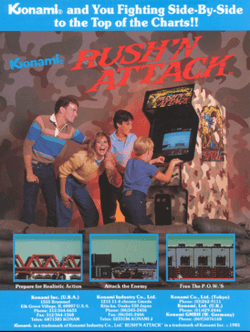
Rush'n Attack
Arcade
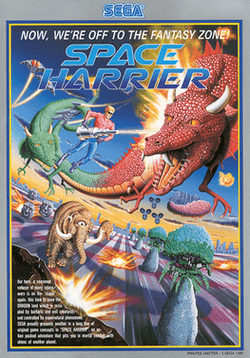
Space Harrier
Arcade
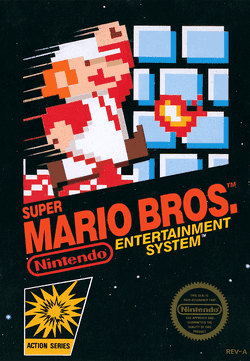
Super Mario Bros.
NES
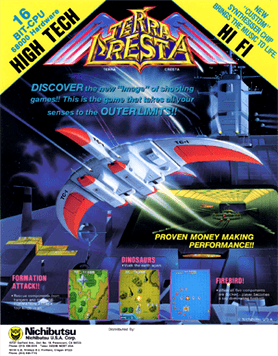
Terra Cresta
Arcade
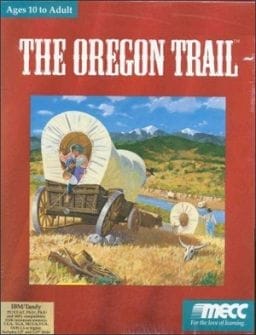
The Oregon Trail
Apple II / DOS
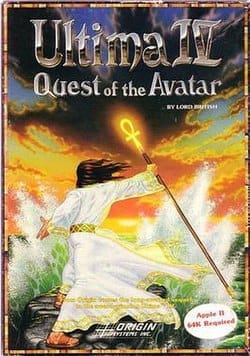
Ultima IV
Apple II / Multiple
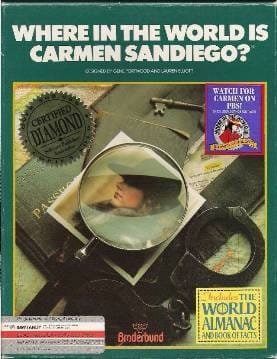
Where in the World Is Carmen Sandiego?
Apple II / Multiple